

Preparing your home for listing photos in the DC Metro Area is one of the most important steps in the selling process.
And here’s something many homeowners don’t realize: according to the National Association of Realtors, nearly all buyers start their home search online, and photos are the first thing they look at.
Before they ever step inside your home, they’ve already formed an opinion.
I’m Edward Slavis with The Slavis Group at LPT Realty. I’ve helped many DMV sellers navigate this process, and I always remind them of one simple truth. Preparing for photos is not about perfection. It’s about presentation. It’s about telling the story of your home clearly and respectfully.
Let’s walk through it together.
Why Do Listing Photos Matter So Much in the DC Metro Area?
In the DMV market, first impressions happen online.
Buyers scrolling through listings in DC, Northern Virginia, or Maryland often make decisions within seconds. If the photos feel dark, cluttered, or distracting, they move on.
Redfin research has shown that professionally photographed homes can sell faster and for more money compared to homes with lower-quality images.
In a competitive market like ours, where buyers may be comparing a Capitol Hill rowhome to a Bethesda colonial or an Arlington condo, strong visuals matter.
Photos are not decoration. They are marketing.

When Should You Start Preparing for Real Estate Photos?
You should begin preparing at least one to two weeks before your scheduled photoshoot.
This gives you time to declutter thoughtfully instead of rushing the night before.
I often tell sellers to treat photo prep as the first stage of moving. You’re not just cleaning. You’re beginning to detach. To simplify. To prepare for transition.
If you have kids, work schedules, or pets, give yourself extra margin. Real life does not pause just because a listing date is approaching.
Starting early lowers stress. And that calm shows.
What Should You Remove Before Listing Photos?
Before listing photos, remove personal items, excess décor, and anything that distracts from the space itself.
Buyers need to imagine themselves living in your home. That becomes difficult when countertops are crowded or walls are filled with personal photographs.
Here are common items to remove:
Family photos and personal memorabilia
Paperwork, mail, and refrigerator magnets
Excess furniture that makes rooms feel smaller
Visible cords and small electronics
Countertop appliances not used daily
Pet bowls, beds, and crates
Trash cans
This is not about erasing your life. It is about creating space.
How Clean Does Your Home Need to Be for Professional Photos?
Your home should be deeply cleaned, not just surface tidy.
Cameras are unforgiving. Dust on baseboards, smudges on stainless steel, and water spots on mirrors will show up more than you expect.
The goal is not sterility. It is care.
Focus on:
Clean windows to maximize natural light
Polished mirrors and fixtures
Vacuumed carpets and swept floors
Clear, wiped-down countertops
Fresh towels in bathrooms
According to HomeLight, staged and well-prepared homes often see measurable return on investment compared to unprepared homes.
Buyers equate cleanliness with maintenance. A clean home signals that it has been well cared for.
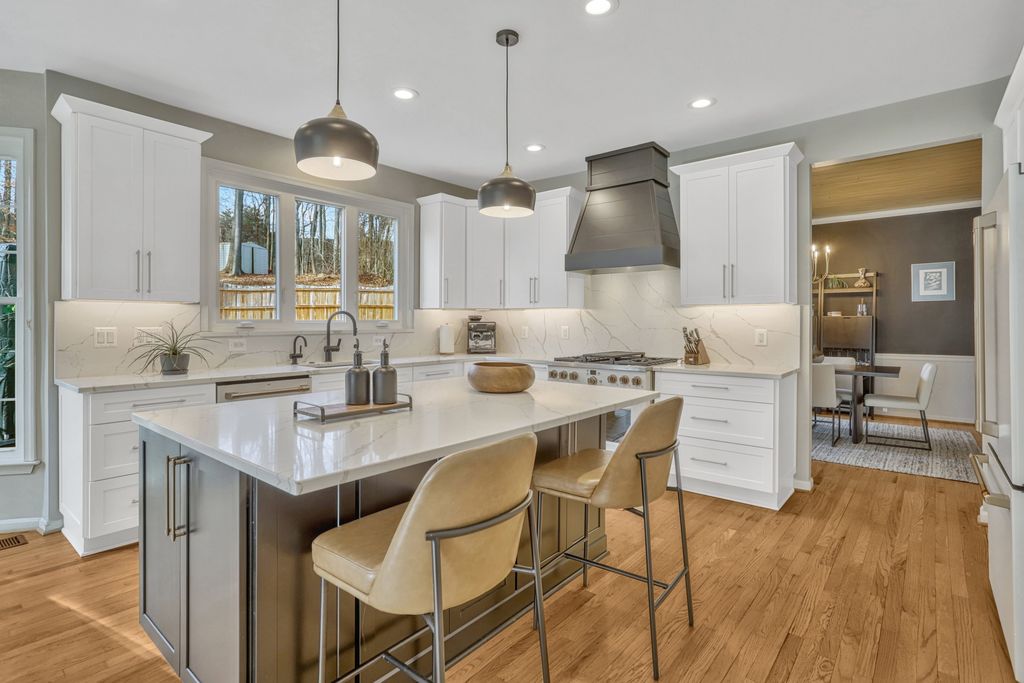
How Should You Prepare Kitchens and Bathrooms for Photos?
Kitchens and bathrooms sell homes in the DMV.
Prepare them as if they were being photographed for a magazine, but without making them feel artificial.
In kitchens:
Clear countertops except for one or two simple items
Remove dish soap, sponges, and drying racks
Hide trash cans
Wipe stainless steel thoroughly
In bathrooms:
Remove all personal toiletries
Store toothbrushes, razors, and medications
Close toilet lids
Use fresh, neutral towels
Simple. Calm. Clean.
How Do You Handle Toys, Pets, and Everyday Family Life Before Photos?
This is where real life meets real estate.
If you have young children, you do not need to pretend you don’t. But for photos, toys should be minimized and organized.
One storage bin per room is fine. Ten are not.
The night before photos, consider packing away most toys temporarily. Leave one or two intentional pieces if appropriate.
For pets:
Remove food bowls and litter boxes
Vacuum pet hair thoroughly
Arrange for pets to be out of the home during the shoot
Research from the National Association of Realtors consistently shows that buyers value move-in ready presentation.
Buyers need to see the space clearly. Not the chaos of everyday life.
And as a parent myself, I understand that this takes effort. It is temporary. It is worth it.
What If You Live in a DC Rowhome or Condo?
In the DMV, many homes have unique layouts.
Rowhomes may have narrow staircases or smaller rooms. Condos may have limited storage. Older homes may have character features that need highlighting.
Preparation becomes even more important.
Remove bulky furniture to open sight lines
Add lamps to brighten darker interiors
Clear entryways, especially in tight rowhome foyers
Stage balconies or small patios intentionally
Bright MLS data consistently shows that presentation impacts buyer interest in competitive submarkets like Capitol Hill, Old Town Alexandria, and Silver Spring.
When square footage is tight, clarity matters.

What Should You Do the Morning of the Photoshoot?
On photo day, simplicity is key.
Turn on all lights
Open blinds and curtains
Remove cars from the driveway
Make beds neatly
Do one final walkthrough
Then step out.
Professional photographers work best in an empty home. The process typically takes 1 to 2 hours, depending on size.
It may feel strange leaving your home to be photographed. But this is part of the transition.
What If Your Home Doesn’t Feel “Perfect”?
Most sellers feel this way.
You see the scratch on the floor. The dated light fixture. The corner you meant to repaint.
Buyers do not expect perfection. They expect honesty and clarity.
Professional photography is not about hiding flaws. It is about presenting strengths.
And often, what feels ordinary to you feels welcoming to someone else.
Final Thoughts
Preparing your home for listing photos in the DC Metro Area is an act of stewardship.
It requires effort. It requires intention. And yes, sometimes it requires clearing out toys at midnight.
But it positions your home to be seen clearly and respectfully by the next owner.
If you’re preparing to sell and want a step-by-step plan beyond photos, I’ve put together a comprehensive guide to walk you through the entire process.
Download our Sellers Guide today and prepare with clarity and confidence.
Frequently Asked Questions
Q: Do I need to stage my home before listing photos?
A: Not always professionally, but thoughtful staging helps. Even light staging, such as decluttering and simplifying furniture, improves how your home photographs and how buyers perceive it.
Q: Should I leave the house during real estate photography?
A: Yes. It allows the photographer to move freely and capture clean angles without interruption.
Q: How long does a professional real estate photoshoot take?
A: Most homes take 1 to 2 hours depending on size, layout, and whether exterior shots are included.
Q: What happens if it rains on photo day?
A: Exterior photography may be rescheduled if weather significantly impacts lighting. Interior photos can usually proceed as planned.
Q: Can I take my own listing photos instead?
A: While it’s possible, professional photography consistently performs better online and attracts more serious buyer interest.
Check out this article next
